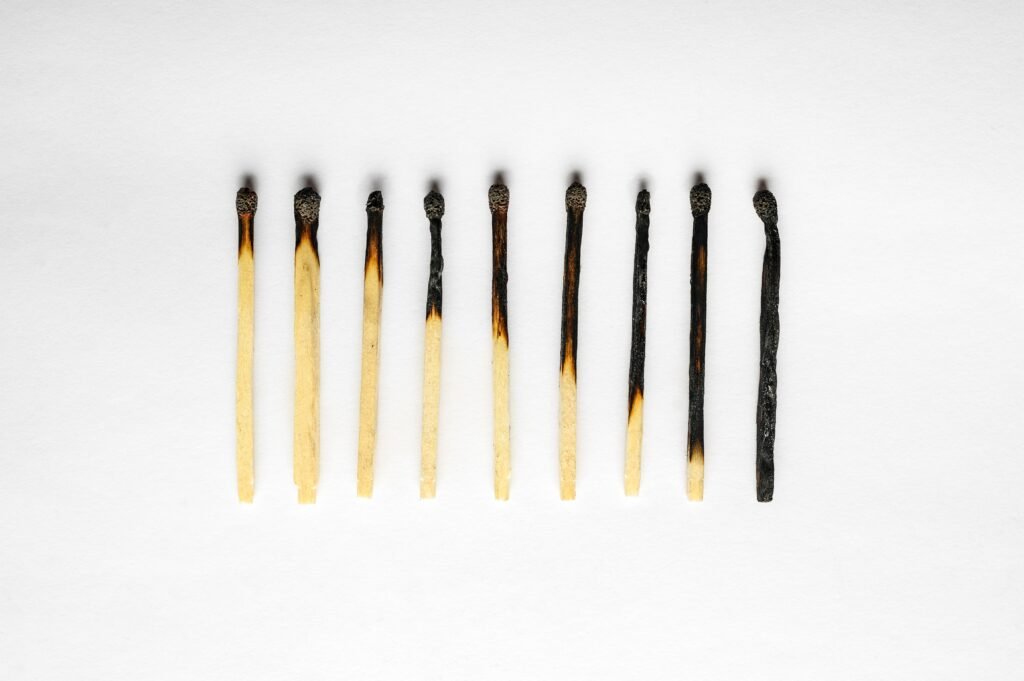
Modern life, professional challenges, and the constant “always-on” mode often become an invisible burden where energy drains not because we do too much, but because we lose touch with what truly matters and no longer have time for quality rest. To better understand burnout mechanisms and find effective ways to regain balance, it is worth turning to two insightful books: Jürgen Twyhues’s Burn out der Manager Reset and Mirriam Preiss’s Burn out kommt nicht nur von stress.
As it is pointed out, burnout is often mistakenly associated solely with excessive workloads. In reality, the greatest stress arises in relationships—with our environment, family, colleagues, or ourselves. Humans constantly balance between internal needs and external demands, and many relationships wither away due to daily “monolouging” when real dialogue is lost. Preiss emphasizes that dialogue doesn’t take hours; often, a few sincere words or a gesture are enough. Furthermore, burnout is frequently driven by deep internal conflicts, disproportionate expectations, or unacknowledged childhood validation, which later forces adults to treat 100% effort as never enough. If out of the core areas of life—profession, family, health, social circle, hobbies, or spirituality—only two are functioning successfully, the body lacks enough outlets to recover.
It is noted that about 80% of people who experience burnout already felt symptoms half a year prior, yet hoped everything would resolve on its own. The burnout process begins with an exhaustion phase where resistance weakens, sleep turns poor, energy fails to return after rest, a “mental fog” appears in meetings, words slip from memory, and fatigue is sometimes masked by unhealthy dependencies. Worse yet, people ignore their body’s limits until serious warning signs appear—headaches, blood pressure issues, or tinnitus. In the final phase, complete withdrawal takes over, where basic tasks feel insurmountable, as if someone pulled the plug.
To prevent these states, Jürgen Twyhues provides concrete everyday tools in his book. One of the most vital elements is quality sleep, which relies on proper routines, environment, and limiting stimulants. Complete silence, noise isolation, and darkness help the body fully recover and improve reaction times. This is precisely where reliable earplugs and sleep masks become indispensable assistants, shielding you from environmental disturbances and allowing the brain to reach deep, uninterrupted sleep phases.
Recommended daily routine adjustments:
Micro-breaks at work: Every 90 minutes, take 1–5 minute breaks to do breathing exercises, walk around, listen to calming music, look at pleasant imagery, or do light stretches to improve circulation. This boosts productivity, creativity, and helps prevent chronic stress.
Physical activity: Incorporating movement into daily life is essential. Exercising outdoors 3–4 times a week reduces stress hormones, stimulates serotonin and dopamine production, strengthens bones, and effectively clears your mind of daily worries.
Separating spaces: When working from home, it is crucial to separate your environments as much as possible. After work, changing clothes, taking a short walk, or meditating helps signal the end of the workday.
Time management and priorities: Establish a clear daily schedule, turn off notifications during specific hours, and track how much time goes into different activities so you can proactively schedule rest, yoga, or eliminate unnecessary tasks.
A strong emphasis is also placed on conscious habit formation. It is suggested building self-discipline by tracking micro-wins in a journal and rewarding yourself—such as enjoying a cup of favorite tea after a workout or buying a theater ticket. When tempted to slip back into bad habits (like unhealthy snacking), the recommendation is to go for a walk or do breathing exercises. Introducing new habits requires strategic planning, and it is important to speak to yourself using positive thoughts and emotions, knowing that even after a hard day, physical movement or rest will help you feel better. The search for balance begins with dialogue with oneself, establishing a clear routine, and having the ability to take care of your physical and emotional health in time.
Discover our carefully selected quality sleep and relaxation essentials—such as premium earplugs and sleep masks—designed to create ideal conditions for peace and recovery in your daily life.
If you want to know more useful information how to deal with burn out, feel free to check out Dr. Mirriam Prieß podcasts.